The Tree of Life Leading Lights
Tickets

On sale viff.org
About
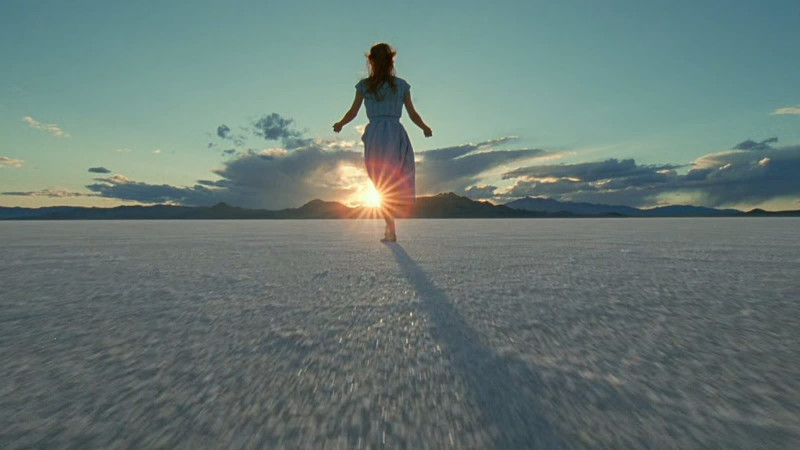
To try and summarize The Tree of Life feels a bit like a fool’s errand. Its central story is, on the surface, fairly simple: a middle-class family in 1950s Texas, told largely through the perspective of their eldest son, Jack, as he looks back on his childhood and the death of his younger brother. It has the signature Malickian poetry, and the film’s omniscient, floating camera moves through space and time in a way that only he can seem to get away with. It’s deeply spiritual, full of palpable grief, and also there are dinosaurs. As mentioned, it’s hard to describe.
One must be careful what they lift from Malick and how directly the inspiration lands on screen. There are a couple of shots that are quite direct, mostly in how he likes to shoot characters interacting through windows, which works quite well in my film as well. Thematically, on the surface, there is a distinct similarity in terms of exploring the grief of a deceased sibling — something that is widely understood to be partly autobiographical for Malick, as it is with my film.
But my main gratitude is owed to the very long, very esoteric screenplay behind the film. I read it during the development of my own, and it gave me permission to write a script for myself as the director: to include images that only I knew how to translate, and, most of all, to include the richness of the soundscape from the very beginning.
I learned from The Tree of Life that even without dialogue, there is no such thing as silence.
Sophy Romvari, Leading Lights Guest Programmer
One must be careful what they lift from Malick and how directly the inspiration lands on screen. There are a couple of shots that are quite direct, mostly in how he likes to shoot characters interacting through windows, which works quite well in my film as well. Thematically, on the surface, there is a distinct similarity in terms of exploring the grief of a deceased sibling — something that is widely understood to be partly autobiographical for Malick, as it is with my film.
But my main gratitude is owed to the very long, very esoteric screenplay behind the film. I read it during the development of my own, and it gave me permission to write a script for myself as the director: to include images that only I knew how to translate, and, most of all, to include the richness of the soundscape from the very beginning.
I learned from The Tree of Life that even without dialogue, there is no such thing as silence.
Sophy Romvari, Leading Lights Guest Programmer